Financing all Credit Types - 
Financing all Credit Types -
Financing all Credit Types -
Financing all Credit Types -
If your car feels bouncy, unstable, or rough while driving, it often indicates a suspension problem. The suspension system is designed to absorb road impacts and keep the tires in contact with the road.
When suspension components wear out, the vehicle may bounce excessively after bumps, feel unstable during turns, or ride rough on uneven roads.
Many drivers first notice the issue when:
the car bounces after hitting a bump
the vehicle feels unstable at highway speeds
the front end dips during braking
the ride becomes rough or uncomfortable
the car leans when turning corners
A professional car suspension and bouncy ride diagnosis can identify the exact cause and prevent further damage to the vehicle.
A rough or bouncy ride occurs when the suspension system can no longer control the movement of the vehicle’s springs and wheels.
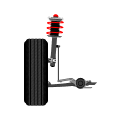
The suspension system consists of several critical components:
shock absorbers
struts
suspension springs
control arms
sway bars
suspension bushings
These components work together to stabilize the vehicle and provide a smooth ride. When one of these parts fails, the car may bounce excessively or feel unstable.
Drivers often notice several warning signs before suspension failure becomes severe.
Common bad shock absorber symptoms or bad strut symptoms include:
car bouncing after bumps
rough ride quality
excessive vehicle body movement
vehicle leaning during turns
nose diving while braking
uneven tire wear
knocking or clunking noises from suspension
steering instability
If you notice these symptoms, a suspension inspection should be performed as soon as possible.
If your vehicle is bouncing while driving, it usually indicates worn suspension components.
The most common causes include worn shocks, failing struts, damaged springs, or worn suspension bushings.
Shock absorbers control suspension movement and absorb road impact.
When shocks wear out, the vehicle may bounce several times after hitting a bump.
Common worn shock symptoms include:
excessive bouncing
rough ride quality
poor vehicle stability
longer stopping distances
Struts are structural suspension components that combine a spring and shock absorber.
When struts fail, drivers may notice:
bouncing after bumps
poor steering control
uneven tire wear
unstable ride
Failing struts are one of the most common causes of vehicle bouncing while driving.
Suspension springs support the vehicle’s weight and absorb road impact.
A damaged spring may cause:
uneven vehicle height
excessive bouncing
rough ride
Bushings cushion suspension components and reduce vibration.
Worn bushings may cause:
clunking sounds
unstable ride
excessive vibration
Control arms connect the suspension to the vehicle frame.
When they wear out, they may cause:
steering vibration
wheel misalignment
unstable driving conditions
Professional mechanics often see suspension problems begin after 60,000–80,000 miles, especially on vehicles driven on rough roads.
Over time, shocks and struts lose hydraulic pressure, which reduces their ability to control suspension movement. This leads to excessive bouncing and poor vehicle handling.
Routine suspension inspections can help identify worn components before they cause major handling issues.
A simple diagnostic method mechanics use is the bounce test.
A mechanic pushes down on the vehicle and releases it.
If the car continues bouncing multiple times before stopping, the shock absorbers or struts are likely worn out.
A healthy suspension should stop bouncing almost immediately.
During a recent Instant Car Fix suspension inspection, a customer reported that their 2016 Toyota Camry felt extremely bouncy after driving over bumps.
The driver noticed:
vehicle bouncing after speed bumps
floating feeling on the highway
front end dipping during braking
uneven tire wear
Our mobile mechanic performed:
Suspension bounce test
Visual inspection of shocks and struts
Road test to evaluate vehicle stability
The front struts were leaking hydraulic fluid and had lost damping pressure.
The recommended repair included:
replacing the front struts
performing a wheel alignment
inspecting suspension bushings
After repairs, the vehicle returned to normal ride stability and smooth driving performance.
Professional mechanics inspect several components when diagnosing suspension problems.
A suspension diagnosis typically includes checking:
shock absorbers
struts
suspension springs
sway bars
control arms
bushings
ball joints
wheel alignment
A proper suspension diagnosis ensures the exact problem is identified before repairs begin.
The cost of suspension repair depends on the failed component.
Typical repair costs include:
Shock absorber replacement
$250 - $600
Strut replacement
$400 - $1,200
Control arm replacement
$350 - $900
Suspension spring replacement
$300 - $800
Wheel alignment
$100 - $200
A suspension inspection can prevent multiple components from wearing out.
Driving with worn suspension components can reduce vehicle safety.
Ignoring suspension problems may lead to:
poor vehicle control
longer braking distances
uneven tire wear
unstable steering
A suspension problem should be diagnosed quickly to avoid additional damage.
Diagnosing suspension issues requires experience and professional inspection tools.
Instant Car Fix provides mobile mechanic services across the United States, helping drivers diagnose vehicle problems without visiting a repair shop.
Our technicians provide:
suspension inspections
bouncy ride diagnosis
shock and strut inspections
steering and handling evaluation
full vehicle safety inspections
Mobile diagnostics make repairs faster and more convenient.
Mechanics inspect suspension components such as shocks, struts, springs, and control arms to determine the cause of the instability.
Excessive bouncing usually indicates worn shock absorbers or failing struts.
Idle fluctuations are typically related to engine issues, not suspension problems.
Repair typically involves replacing worn suspension components such as shocks, struts, or bushings.
Most shocks and struts last between 50,000 and 100,000 miles, depending on driving conditions.
A bouncy or unstable ride is often the first sign of suspension problems.
Ignoring suspension issues can lead to poor vehicle handling, uneven tire wear, and safety risks.
A professional Car Suspension and Bouncy Ride Diagnosis helps identify worn suspension components early and restore smooth driving performance.
Get a real Car Suspension and Bouncy Ride Diagnosis service from a mobile mechanic near you, no workshop visit needed.
No commitment • See pricing instantly

Even though the original tec canceled out, the replacement tec was absolutely the best. He was very knowledgeable of my car and found the problem very quickly. I’am very happy with the work performed by instant car fix and will definitely use them in the future. Thank you


Amazing fast efficient service! No complaints at all. The parts store provided the wrong brakes which extended the technician is time which is no fault of the business.

I needed my alternator replaced as I was unable to do it myself. I called around locally to several shops to get quotes varying from $1100 to $650 which included parts and labor. I would also need to make the arrangements to have my vehicle towed to a shop. That is when I looked into InstantCarFix. They responded quickly, provided me quotes that were for labor only (I could obtain parts on my own) and a quote for parts + labor which were less than the local shops quotes. Scheduling options were next day, most likely due to the correspondence being in the evening. The mobile mechanic was prompt, texted upon arrival, completed the service surprisingly quick, texted when completed, reviewed the work done, and invoice was sent via email with pictures of the service. Highly recommend InstantCarFix and if you can, request "Sergio" as the mechanic!

KP came and changed out my non-working battery and made sure the new was in and secure, and running correctly. He also tested the alternator and made sure it was running properly as well. Very knowledgeable and the process was quick and easy!

John came out in the rain and performed the exact job needed, with flawless accuracy and care, definitely the right guy for the job

Hello, So, Michael the mobile mechanic stopped by to diagnose my car. First time customer and he impressed me so much with his courtesy and knowledge of electrical issues. If there were more stars, he certainly earned them! Thank you so much to Instant car fix for hooking me up with this Stellar Mechanic and all around nice guy. Another Satisfied customer, lane lamont.

O typically don't give a perfect score, but this guy busted his behind to get to my low beam bulb. I drive a GMC Terrain and the task was not easy. They gave a 4 hr window, but he got here within the first hour. 10/10 recommend.

Was on time great communication very professional very polite. Enjoyed the experience thank you so much. And an extra special thank you to John for coming out here on Easter Sunday. It is so appreciated.

Ruben was awesome, came out well after hours to change out my serpentine belt. Really appreciate the great work.

Even though the original tec canceled out, the replacement tec was absolutely the best. He was very knowledgeable of my car and found the problem very quickly. I’am very happy with the work performed by instant car fix and will definitely use them in the future. Thank you
Amazing fast efficient service! No complaints at all. The parts store provided the wrong brakes which extended the technician is time which is no fault of the business.
I needed my alternator replaced as I was unable to do it myself. I called around locally to several shops to get quotes varying from $1100 to $650 which included parts and labor. I would also need to make the arrangements to have my vehicle towed to a shop. That is when I looked into InstantCarFix. They responded quickly, provided me quotes that were for labor only (I could obtain parts on my own) and a quote for parts + labor which were less than the local shops quotes. Scheduling options were next day, most likely due to the correspondence being in the evening. The mobile mechanic was prompt, texted upon arrival, completed the service surprisingly quick, texted when completed, reviewed the work done, and invoice was sent via email with pictures of the service. Highly recommend InstantCarFix and if you can, request "Sergio" as the mechanic!
KP came and changed out my non-working battery and made sure the new was in and secure, and running correctly. He also tested the alternator and made sure it was running properly as well. Very knowledgeable and the process was quick and easy!
John came out in the rain and performed the exact job needed, with flawless accuracy and care, definitely the right guy for the job
Hello, So, Michael the mobile mechanic stopped by to diagnose my car. First time customer and he impressed me so much with his courtesy and knowledge of electrical issues. If there were more stars, he certainly earned them! Thank you so much to Instant car fix for hooking me up with this Stellar Mechanic and all around nice guy. Another Satisfied customer, lane lamont.
O typically don't give a perfect score, but this guy busted his behind to get to my low beam bulb. I drive a GMC Terrain and the task was not easy. They gave a 4 hr window, but he got here within the first hour. 10/10 recommend.
Was on time great communication very professional very polite. Enjoyed the experience thank you so much. And an extra special thank you to John for coming out here on Easter Sunday. It is so appreciated.
Ruben was awesome, came out well after hours to change out my serpentine belt. Really appreciate the great work.