Financing all Credit Types - 
Financing all Credit Types -
Financing all Credit Types -
Financing all Credit Types -
Battery terminals are small parts of your vehicle’s electrical system, but when they fail, they can cause big problems. Many drivers assume a dead battery is the reason their vehicle will not start, when in reality the issue is often a loose, corroded, or damaged battery terminal.
Battery terminals are responsible for delivering electrical power from the battery to the starter motor, alternator, and the rest of the vehicle’s electrical system. If that connection becomes weak, the vehicle may struggle to start, lose electrical power, or experience intermittent electrical problems.
Drivers often notice corrosion around the battery posts or experience slow cranking and wonder if they need a new battery. In many cases, the battery is still perfectly good, the real issue is poor contact at the terminals.
In this guide, we’ll explain:
What battery terminals are
Symptoms of bad battery terminals
What causes battery terminal corrosion
Whether you can drive with bad battery terminals
How to clean battery terminals properly
Battery terminal replacement cost
Vehicles prone to battery terminal problems
Real-world repair examples from Instant Car Fix
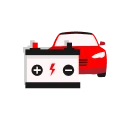
Battery terminals are the metal connectors attached to the top or side of a vehicle’s battery that allow electricity to flow between the battery and the vehicle’s electrical system.
Every car battery has two terminals:
Positive terminal (+)
Usually connected to a red cable and distributes power throughout the vehicle.
Negative terminal (-)
Connected to a black cable and provides the electrical ground connection for the system.
The battery cables attach to these terminals and carry electrical power to components such as:
starter motor
alternator
engine control module
fuse box
headlights and accessories
Without a solid connection at these terminals, the battery cannot supply power to the vehicle.
Battery terminals act as the gateway for electrical current between the battery and the rest of the vehicle.
Their job is to:
• Deliver power to the starter motor when the engine starts
• Provide electricity to vehicle electronics
• Allow the alternator to recharge the battery
• Complete the electrical grounding circuit
Because they handle high electrical current, battery terminals must remain clean, tight, and free of corrosion.
Even a small amount of corrosion can restrict electrical flow.
Bad battery terminals can create several symptoms that may look similar to other electrical problems.
One of the most common signs is when the engine turns over slowly while starting.
This usually means the starter motor is not receiving enough electrical current.
If the vehicle clicks when the key is turned but does not start, the battery terminals may not be delivering enough power.
Drivers may notice:
flickering dashboard lights
dim headlights
radio resetting
intermittent electronics
White, blue, or green buildup around the battery posts is a clear sign of battery terminal corrosion.
If the terminal clamp moves easily on the battery post, it may not be making proper electrical contact.
Technically, a vehicle may still run with bad battery terminals, but it is not recommended.
Battery terminals are responsible for maintaining a stable electrical connection between the battery and the vehicle. If that connection becomes weak or intermittent, several problems can occur while driving.
For example:
the engine may stall unexpectedly
dashboard electronics may shut off
the alternator may not charge the battery properly
the vehicle may fail to restart once turned off
Loose battery terminals can also cause sudden electrical interruptions. In modern vehicles with electronic control modules, that can lead to sensor errors or unexpected warning lights.
While a car might still run for a short period with corroded or loose terminals, the risk of losing electrical power or being stranded increases significantly.
If battery terminal corrosion or looseness is visible, it is best to repair the issue as soon as possible.
Battery terminal corrosion occurs due to chemical reactions involving battery acid and the metal connectors.
Common causes include:
Lead-acid batteries release hydrogen gas during charging. That gas reacts with the metal terminals and forms corrosion.
If battery acid escapes around the battery post seals, corrosion may form around the terminals.
Environmental moisture and road debris accelerate corrosion buildup.
Older batteries are more likely to leak small amounts of acid that lead to corrosion.
Drivers often ask:
Why do my battery terminals keep corroding?
In many cases, repeated corrosion means the battery itself is nearing the end of its life or the charging system may be overcharging the battery.
When working on a battery, safety is extremely important.
When disconnecting a car battery:
Always disconnect the negative terminal first.
This prevents accidental electrical short circuits if a tool touches the vehicle’s metal frame.
When reconnecting the battery:
Connect the positive terminal first, then the negative terminal.
This simple rule helps prevent sparks and electrical damage.
Cleaning battery terminals is one of the easiest maintenance tasks for a vehicle.
baking soda
water
wire brush or terminal brush
gloves
safety glasses
Turn off the vehicle
Disconnect the negative terminal first
Disconnect the positive terminal
Mix baking soda and water to create a cleaning solution
Apply the mixture to the corroded terminals
Scrub the terminals with a brush
Rinse and dry the terminals
Reconnect positive first, then negative
Baking soda helps neutralize battery acid and remove corrosion safely.
Yes. Battery terminals can be replaced if they become damaged or excessively corroded.
A mechanic may replace a battery terminal if:
the connector is cracked
corrosion has eaten away the metal
the terminal clamp will not tighten properly
the cable connection is damaged
Replacing a battery terminal connector is often a quick repair that restores proper electrical contact.
Battery terminal replacement is usually an inexpensive repair.
Typical costs include:
Battery terminal connector:
$10 – $40
Labor cost:
$50 – $120
Average repair cost:
$60 – $160
If the battery cable itself must be replaced, the repair cost may increase slightly depending on the vehicle.
Battery terminal corrosion and loose connections can occur in any vehicle, but some models appear more frequently in repair shops.
Ford models such as the Ford Escape, Ford Focus, and Ford F-150 often experience battery terminal corrosion as they age.
Some Nissan Altima models are known for corrosion on the positive battery terminal assembly.
Vehicles like the Chevy Silverado and GMC Sierra may develop terminal corrosion due to engine heat and heavy electrical loads.
Older Honda Accord and Honda Civic models sometimes develop worn or loose battery terminal clamps.
Some BMW models have complex negative terminal sensors that may fail over time.
Professional technicians recommend several practices to prevent battery terminal problems.
Checking the battery during routine maintenance helps identify corrosion early.
Dielectric grease or battery terminal protectant helps prevent moisture damage.
Corrosion can travel inside battery cables, which may require cable replacement.
Repeated corrosion may indicate that the alternator is overcharging the battery.
Battery terminal problems can look similar to other electrical issues such as a weak battery, faulty alternator, or failing starter motor.
Technicians at Instant Car Fix perform a full electrical system inspection to identify the exact cause of starting problems.
Diagnostic services include:
battery testing
terminal inspection and cleaning
battery cable inspection
charging system testing
terminal connector replacement
Drivers all over the country rely on Instant Car Fix technicians to diagnose electrical problems quickly.
A driver in Philadelphia contacted Instant Car Fix because their Nissan Altima would not start in the morning.
Inspection revealed heavy corrosion around the positive battery terminal.
After cleaning the terminal and replacing the connector, the vehicle started normally again.
A Ford Escape owner in Arizona experienced intermittent electrical issues and occasional stalling.
Technicians found the negative battery terminal had loosened due to vibration.
After tightening and cleaning the terminal, the vehicle operated normally.
A Chevy Silverado driver in South Riding, VA reported slow engine cranking during cold mornings.
Inspection showed corrosion had spread from the battery terminal into the cable.
Replacing the cable end restored proper electrical flow and solved the starting issue.
Signs include corrosion, loose connections, slow engine cranking, clicking sounds when starting, and electrical issues.
Yes. If the electrical connection is weak, the starter motor may not receive enough power.
Yes. Battery terminals and cable connectors can be replaced if they are damaged or heavily corroded.
Most repairs cost between $60 and $160, depending on the vehicle and labor required.
Battery terminal corrosion is usually caused by battery acid vapors, leaks, moisture, and aging batteries.
Battery terminals are small components, but they play a critical role in delivering electrical power throughout your vehicle.
Corroded or loose battery terminals can cause starting issues, electrical problems, and charging system failures.
Fortunately, these problems are usually easy to diagnose and inexpensive to repair.
If your vehicle is experiencing starting issues or visible corrosion around the battery terminals, technicians at Instant Car Fix can quickly identify the problem and restore reliable electrical connections.
Get a real Battery Terminals service from a mobile mechanic near you, no workshop visit needed.
No commitment • See pricing instantly

Ruben was awesome, came out well after hours to change out my serpentine belt. Really appreciate the great work.


Even though the original tec canceled out, the replacement tec was absolutely the best. He was very knowledgeable of my car and found the problem very quickly. I’am very happy with the work performed by instant car fix and will definitely use them in the future. Thank you

John came out in the rain and performed the exact job needed, with flawless accuracy and care, definitely the right guy for the job

KP came and changed out my non-working battery and made sure the new was in and secure, and running correctly. He also tested the alternator and made sure it was running properly as well. Very knowledgeable and the process was quick and easy!

Hello, So, Michael the mobile mechanic stopped by to diagnose my car. First time customer and he impressed me so much with his courtesy and knowledge of electrical issues. If there were more stars, he certainly earned them! Thank you so much to Instant car fix for hooking me up with this Stellar Mechanic and all around nice guy. Another Satisfied customer, lane lamont.

I needed my alternator replaced as I was unable to do it myself. I called around locally to several shops to get quotes varying from $1100 to $650 which included parts and labor. I would also need to make the arrangements to have my vehicle towed to a shop. That is when I looked into InstantCarFix. They responded quickly, provided me quotes that were for labor only (I could obtain parts on my own) and a quote for parts + labor which were less than the local shops quotes. Scheduling options were next day, most likely due to the correspondence being in the evening. The mobile mechanic was prompt, texted upon arrival, completed the service surprisingly quick, texted when completed, reviewed the work done, and invoice was sent via email with pictures of the service. Highly recommend InstantCarFix and if you can, request "Sergio" as the mechanic!

O typically don't give a perfect score, but this guy busted his behind to get to my low beam bulb. I drive a GMC Terrain and the task was not easy. They gave a 4 hr window, but he got here within the first hour. 10/10 recommend.

Amazing fast efficient service! No complaints at all. The parts store provided the wrong brakes which extended the technician is time which is no fault of the business.

Was on time great communication very professional very polite. Enjoyed the experience thank you so much. And an extra special thank you to John for coming out here on Easter Sunday. It is so appreciated.

Ruben was awesome, came out well after hours to change out my serpentine belt. Really appreciate the great work.
Even though the original tec canceled out, the replacement tec was absolutely the best. He was very knowledgeable of my car and found the problem very quickly. I’am very happy with the work performed by instant car fix and will definitely use them in the future. Thank you
John came out in the rain and performed the exact job needed, with flawless accuracy and care, definitely the right guy for the job
KP came and changed out my non-working battery and made sure the new was in and secure, and running correctly. He also tested the alternator and made sure it was running properly as well. Very knowledgeable and the process was quick and easy!
Hello, So, Michael the mobile mechanic stopped by to diagnose my car. First time customer and he impressed me so much with his courtesy and knowledge of electrical issues. If there were more stars, he certainly earned them! Thank you so much to Instant car fix for hooking me up with this Stellar Mechanic and all around nice guy. Another Satisfied customer, lane lamont.
I needed my alternator replaced as I was unable to do it myself. I called around locally to several shops to get quotes varying from $1100 to $650 which included parts and labor. I would also need to make the arrangements to have my vehicle towed to a shop. That is when I looked into InstantCarFix. They responded quickly, provided me quotes that were for labor only (I could obtain parts on my own) and a quote for parts + labor which were less than the local shops quotes. Scheduling options were next day, most likely due to the correspondence being in the evening. The mobile mechanic was prompt, texted upon arrival, completed the service surprisingly quick, texted when completed, reviewed the work done, and invoice was sent via email with pictures of the service. Highly recommend InstantCarFix and if you can, request "Sergio" as the mechanic!
O typically don't give a perfect score, but this guy busted his behind to get to my low beam bulb. I drive a GMC Terrain and the task was not easy. They gave a 4 hr window, but he got here within the first hour. 10/10 recommend.
Amazing fast efficient service! No complaints at all. The parts store provided the wrong brakes which extended the technician is time which is no fault of the business.
Was on time great communication very professional very polite. Enjoyed the experience thank you so much. And an extra special thank you to John for coming out here on Easter Sunday. It is so appreciated.